miércoles, 5 de agosto de 2020

Hi or Hello?


En Inglés existen numerosas formas para decir iHola!, iniciando con Hi!, que es lo mismo que Hello!, pero de una manera más corta.


De esta manera es que se saludan la mayoría de personas, exceptuando en situaciones en las que se requieren cierta formalidad.


Otra forma muy común de saludar suele ser Hey! Este también suele usarse para llamar la atención o de abordar a alguien haciéndole saber que es de tu agrado.


What´s up? suele venir acompañado de Hi, sin embargo, a veces suele sonar más común was up. Esta expresión tiene como significado: ¿Qué tal?, ¿Qué te cuentas?


Hi  se utiliza un millón de veces al dia a modo de saludo en la mensajería instantánea de las redes sociales como Instagram, facebook, entre otras.


¡Cuánto tiempo!

Cuando pasa mucho tiempo que no ves algún amig@, puedes utilizar los siguientes saludos:

Long time no see!

Haven’t seen you for donkey’s years!

Haven’t spoken to you in yonks! (yonks puede sustituirse por in ages y, a veces, for yonks)


¡Hasta luego!

Al marcharte, puedes decir bye!, bye bye! (es muy habitual duplicar esta frase) o see ya! (nos vemos)


Hello stranger!  ¡Hola, cuánto tiempo!

Hey!  ¡Hola!

Haven’t seen you in donkey’s years! ¡Hace un siglo que no nos vemos!

Haven’t seen you in/for yonks! ¡Hace un siglo que no nos vemos!

Hi! ¡Hola!

Hiya! ¡Hola! ¿Qué tal?

Howaya! ¡Hola! ¿Qué tal?

How are things?  ¿Cómo te va?

Hows things? Hows tricks? ¿Cómo te va?

Long time no see! ¡Hace un montón que no nos vemos!

See ya! ¡Nos vemos!

See ya later! ¡Nos vemos!

What’s up?, Was up?, Sup? ¿Qué tal? ¿Qué te cuentas?


Aquí te dejo este video, obsérvalo y escribe en los comentarios, cuales frases aparecen en él que no he mencionado.


lunes, 23 de marzo de 2020

Simple Present (Affirmative) Para 3ro

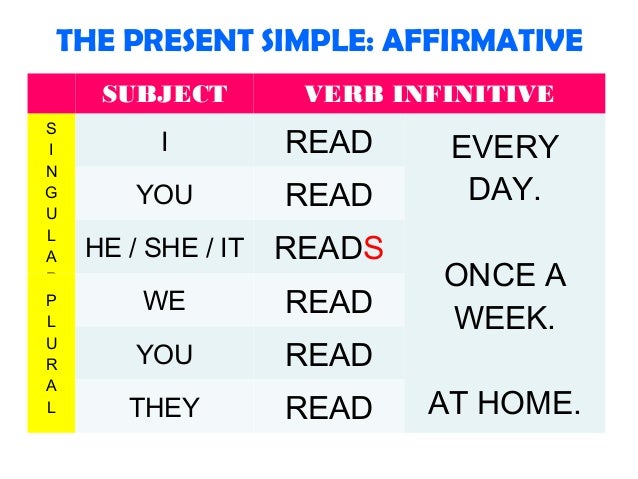
El Presente Simple es un tiempo verbal que se utiliza para describir acciones habituales que suceden con cierta frecuencia y no hace referencia a si está ocurriendo en el momento actual.

Por ejemplo las cosas que realizamos todos los días (caminar, estudiar, almorzar, leer, salir...). En Inglés existe una regla, y es que cuando se habla de la tercera persona, se le agrega s al final del verbo, si la oración es afirmativa. Es decir que cuando se hable de (el, ella o un objeto o cosa, /he, she, it) se le agrega s al final del verbo si lo que se dice es cierto. Por ejemplo:

I speak English

He speaks English


VERBOS que puedes usar en las oraciones afirmativas cuando hablas de HE,SHE, IT


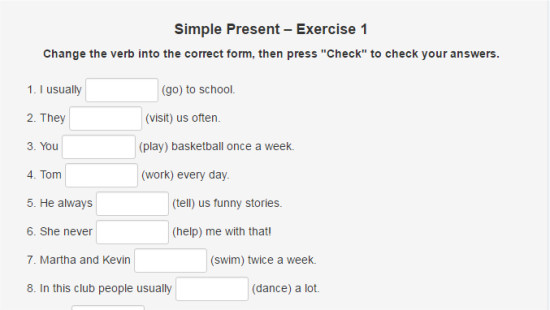
Primer ejercicio para completar y enviar.

Completa cada oración con el verbo que esta en paréntesis, teniendo en cuenta las reglas anteriormente mostradas.


Segundo ejercicio para completar en linea, no necesita ser enviado. 

Abre el siguiente link Exercise #1 y teniendo en cuenta las reglas del presente simple en afirmativo, selecciona uno de los verbos que te muestran. Al final, le das un clic a: Check answers y podrás ver la corrección de cada oración del ejercicio. 

-Comenta aquí debajo: (esto es parte de la participación)

¿Para qué nos sirve el presente simple en la vida diaria?
¿Crees que es importante éste tema? ¿Por qué?


viernes, 20 de marzo de 2020


Bienvenidos sean todos a este sitio web, donde vamos a dar seguimiento al aprendizaje del idioma Inglés. Espero que este trayecto sea muy beneficioso para cada uno de ustedes, y sobre todo que disfruten esta forma de aprendizaje a distancia! 

Como ya saben, deben asumir su rol, para que este proceso sea efectivo. 

Importante!!! 

Cada participante deberá enviar sus reportes individuales, sea por correo electrónico o por Whatsapp de manera privada, no por el grupo. 

Es importante que cada participante envíe su asignación antes de la fecha límite. 


sábado, 14 de marzo de 2020

Present Simple and Present Continuous

What's the difference?
Present Simple and Present Continuous


Present SimplePresent Continuous
Things which are always true:
  • Water boils at 100 degrees.
Things which are happening at the moment of speaking:
  • The water is boiling now, so you can put in the pasta.
Permanent situations (or nearly permanent; true for a few years at least):
  • Julie lives in London.
Temporary situations:
  • Julie is living in Paris for a few months (usually she lives in London).
Situations which are slowly changing:
  • I'm getting better and better at speaking English.
Habits or things we do regularly:
  • I drink coffee every morning.
Temporary or new habits:
  • I'm drinking too much coffee these days because I'm so busy at work.
Annoying habits (usually with 'always'):
  • My flatmate is always leaving the kitchen in a mess!
Future events which are part of a timetable:
  • My plane leaves at eight tonight.
To talk about the future after certain words ('when' 'until' 'after' 'before' 'as soon as'):
  • I'll call you when I get home.
Definite future plans:
  • I'm meeting John after class today.
To talk about what happens in books, plays and films:
  • At the end of the book, the detective catches the killer.
To talk about people in pictures and photos:
  • In this photo, my mother is walking beside a lake.
Remember:
  • We use the present simple with stative verbs. We can't use any continuous tense (including the present continuous tense, of course) with stative verbs.


Let´s practice this grammar by completing these online exercises:


domingo, 1 de marzo de 2020

Articles: a/an/the. - ppt video online download

Articles: a/an/the. - ppt video online download: Using Articles What is an article? Basically, an article is an adjective. Like adjectives, articles modify nouns. English has two articles: the and a/an. The is used to refer to specific or particular nouns; a/an is used to modify non-specific or non-particular nouns. We call the the definite article and a/an the indefinite article. the = definite article a/an = indefinite article For example, if I say,

martes, 3 de diciembre de 2019

5


 5 Questions for an oral evaluation

Personal Questions
  • What´s your name?
  • How are you today?
  • What is she wearing?
  • What are you wearing?
  • What is your teacher wearing?
  • What´s the weather like?
  • Are you from Colombia?
  • Where are you and your family from?
  • What is your hometown like?
  • Is English your first language?
  • Who is your best friend?
  • How old is your best friend?
  • Is your teacher from Puerto Rico?
  • Are your classmates North American? 
Personal Objects:
  • What´s this?
  • What are these?
..................................................................................
Clothes Vocabulary


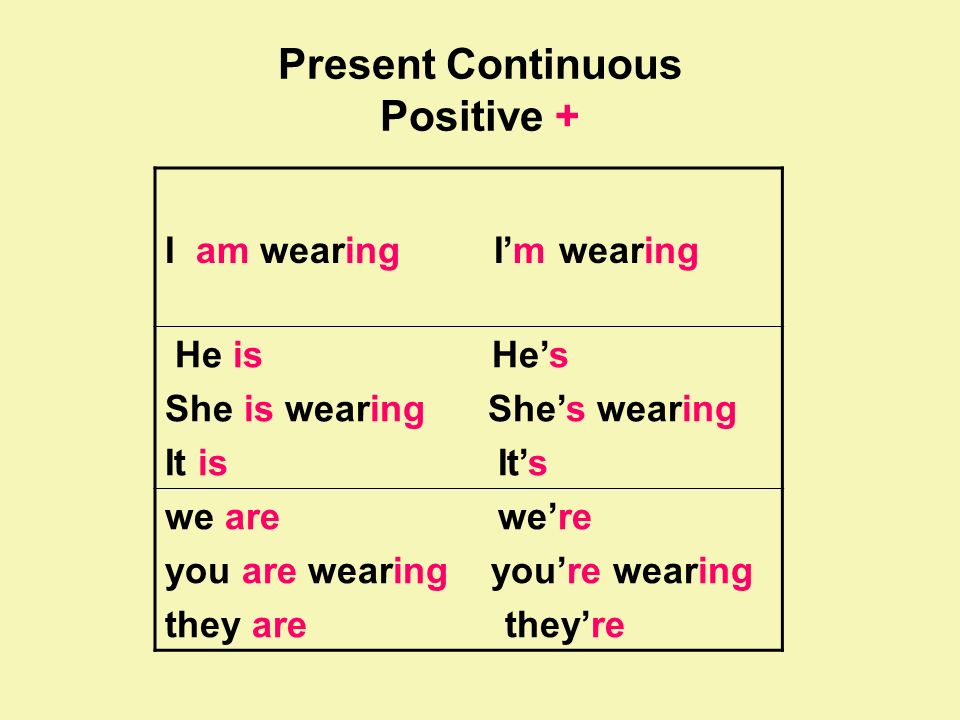
Wearing grammar
What are you wearing today?
I´m wearing boots.


Personal Objects


¿Qué es Halloween 🎃?